For retail and e-commerce buyers, neoprene bags are becoming more than a casual accessory. They sit in a practical space between fashion, travel, work and everyday carry. The material is soft but structured, lightweight but protective, and easy to style for both minimalist and active-lifestyle brands.
That combination explains why many brands are looking at neoprene bags for 2026 product planning. A customer may use the same bag for a commute, a weekend trip, a gym visit, a beach day or a laptop-friendly work routine. For buyers, the opportunity is not just to sell a bag; it is to build a durable, flexible product line that fits daily use.
This guide explains why neoprene is gaining attention, what makes it useful for travel and daily scenarios, and what brand buyers should confirm when sourcing custom neoprene bags from an OEM manufacturer.
Why Neoprene Bags Fit the 2026 Bag Market
Modern bag buyers want products that look clean, feel comfortable and survive frequent use. Neoprene answers many of these needs because it keeps a soft, slightly padded hand feel while holding a clear shape better than many ordinary thin fabrics.
For e-commerce brands, neoprene also photographs well. A simple tote, crossbody or travel bag can look premium when the shape is balanced, the seams are clean and the color palette is controlled. For retail buyers, this matters because online conversion depends heavily on product images, perceived texture and the customer’s sense of daily usefulness.
What Makes Neoprene Useful for Bags?
Neoprene is a synthetic rubber material widely known for its soft, flexible and cushioning characteristics. In bag applications, buyers are usually interested in its padded feel, shape retention, water-resistant surface behavior and ability to support clean, modern silhouettes.
The key is not just the material itself. A good neoprene bag depends on how the material is cut, bonded, stitched, reinforced and finished. Thick or elastic material can expose weak production skills quickly, especially around handles, zipper openings, curved seams and boxed corners.
| Buyer Need | How Neoprene Helps | What to Confirm with Supplier |
|---|---|---|
| Lightweight daily use | Soft structure without heavy rigid panels | Material thickness, lining choice and final bag weight |
| Shape retention | Holds a cleaner form than thin fabric bags | Pattern design, seam reinforcement and bottom construction |
| Travel practicality | Flexible, cushioned and easy to pack | Handle strength, zipper quality and interior organization |
| Easy cleaning | Smooth surface is easier to wipe than many textured fabrics | Surface finish, colorfastness and care instructions |
| Brand customization | Works with labels, patches, embroidery and print directions | Logo method, color matching and sample approval process |
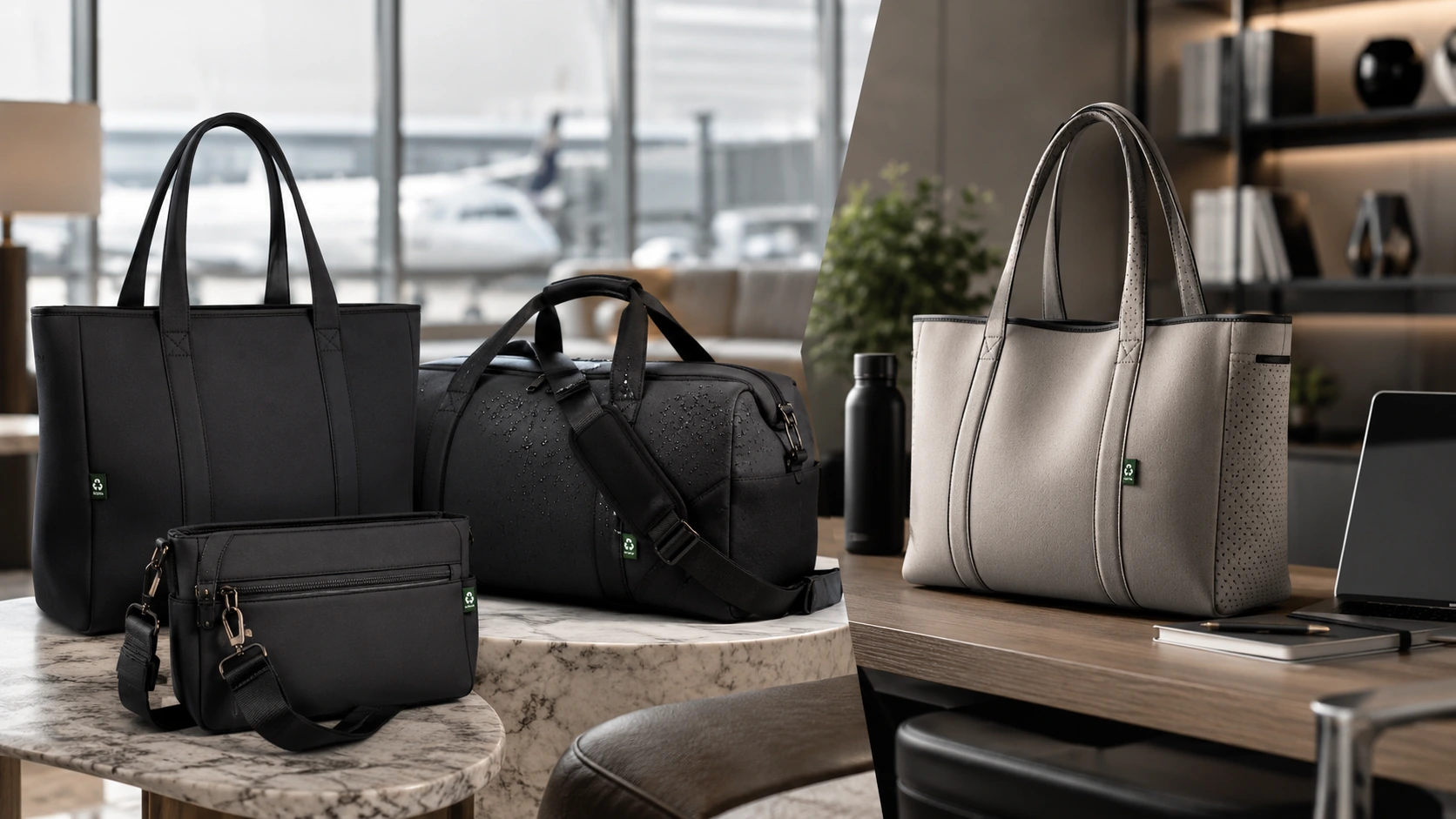
Travel and Daily-Use Scenarios Buyers Should Target
Neoprene bags are attractive because they can move between different lifestyle scenes without feeling out of place. A brand does not need to position them as one narrow product. The same material can support several commercial directions.
For buyers, the best product direction depends on target customer, price level and sales channel. A marketplace seller may prioritize lightweight shipping and strong product images. A retail brand may care more about hand feel, inner pockets and shelf presentation. A corporate gift buyer may care more about logo method, packing and order lead time.
OEM and Customization Advantages Buyers Should Look For
Custom neoprene bags are not only about choosing a color and adding a logo. The real OEM value comes from material handling, pattern development, stitching control and finishing consistency.
Because neoprene can be thicker and more elastic than ordinary woven fabric, production teams need practical experience with cutting accuracy, seam tension and reinforcement. Poor control can lead to distorted edges, uneven stitching, weak handle attachment or a bag that does not keep the intended shape.
| OEM Capability | Why It Matters | Buyer Checkpoint |
|---|---|---|
| Thick material handling | Neoprene can be bulky at seams and corners | Ask how the supplier handles seam allowance, edge finishing and reinforcement |
| Clean stitching | Visible stitches affect perceived retail quality | Review close-up sample photos and physical pre-production samples |
| Shape development | The final bag must stand, fold or carry correctly | Confirm prototype structure before mass production |
| Logo customization | Brand identity depends on the right logo technique | Compare woven labels, rubber patches, embroidery and printing |
| Eco-friendly neoprene options | Some brands need a more responsible material story | Ask what eco-friendly material options, statements or documentation can be supported |
Eco-Friendly Neoprene: What Buyers Should Ask
Many brands want a cleaner sustainability story, but buyers should avoid vague claims. “Eco-friendly neoprene” can mean different things depending on the material supplier, production method and supporting documentation. The safest approach is to ask specific questions before using environmental wording in product pages or marketing materials.
- What material option is being described as eco-friendly neoprene?
- Is there any recycled content, alternative formulation or supplier declaration?
- Can the material supplier provide documentation for the claim?
- How should the claim be worded on product pages and packaging?
- Does the packaging also support the sustainability direction?
Buyer Checklist Before Sampling Neoprene Bags
- Confirm target product type: tote, travel bag, crossbody, pouch, lunch bag or gift set.
- Confirm material thickness, surface texture and color direction.
- Confirm lining, zipper, handle, shoulder strap and hardware requirements.
- Confirm whether the bag should stand upright, fold flat or keep a soft shape.
- Choose the logo method: woven label, rubber patch, embroidery, print or metal badge.
- Ask for close-up sample photos of stitching, corner finishing and handle reinforcement.
- Confirm packaging method for retail, e-commerce shipping or gift presentation.
- Discuss eco-friendly neoprene options before writing product marketing claims.
How LANYVO Can Support Neoprene Bag Projects
LANYVO can help retail and e-commerce buyers develop neoprene bags for travel, work, promotional programs and lifestyle product lines. Our support can include product structure discussion, material direction, logo application, stitching review, packaging planning and sample coordination.
For brand buyers, the most efficient way to start is to send reference photos, target dimensions, estimated quantity, logo file, price level and required launch date. From there, we can help turn the concept into a more realistic sampling direction.
Planning a custom neoprene bag line for 2026?
Send your reference style, target size, logo, quantity and sales channel. LANYVO can help you review material, stitching, logo method, packaging and sample direction before production.
FAQ
Are neoprene bags suitable for travel brands?
Yes. Neoprene bags are lightweight, flexible and practical for travel-focused product lines when structure, handle strength and zipper quality are planned correctly.
Can neoprene bags be customized for e-commerce brands?
Yes. Buyers can customize shape, size, color, logo method, lining, strap, packaging and retail presentation.
What logo methods work for neoprene bags?
Common options include woven labels, rubber patches, embroidery, printing and metal badges depending on the brand style and budget.
Should I request a sample before bulk production?
Yes. A sample is important because neoprene bag quality depends heavily on stitching, reinforcement, edge finishing and final shape.