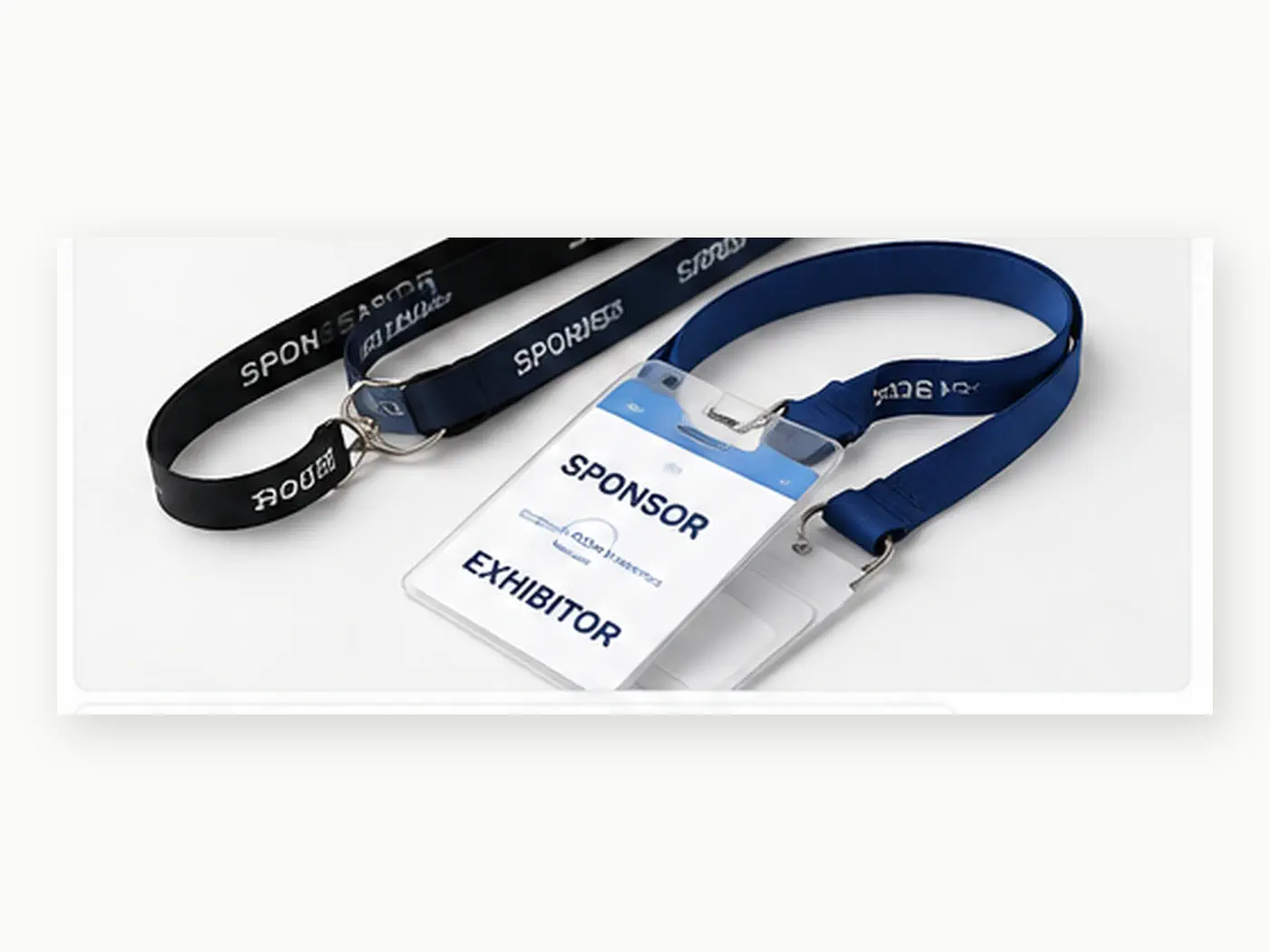
At events, the lanyard is often the fastest visual signal that someone belongs in a specific working role. A recent videography discussion described an official event media team receiving event-issued lanyards and badges. For a buyer, that creates a useful specification question: what should a media credential do differently from a general attendee lanyard?
A media credential is an access tool first
Press, photography, video and production crews may move between registration, backstage, floor, interview and restricted working areas. The credential should be easy for security and staff to identify without forcing the wearer to stop and explain the badge repeatedly.
Use a distinct visual system
That may mean a specific strap color, repeated “MEDIA” wording, a high-contrast badge design, or a unique attachment. Avoid relying only on tiny badge text. The lanyard itself can become part of the role-identification system when the visual rule is simple and documented.
Separate branding from access control
A sponsor logo and an access label are not the same thing. If the strap must carry several sponsor logos, preserve enough contrast and spacing that the operational role remains obvious. If the event uses colors to indicate zones, define those colors before artwork is finalized.
| Buyer decision | Media-credential implication |
|---|---|
| Role wording | Keep “MEDIA,” “PRESS,” “PHOTO” or “PRODUCTION” readable and consistent. |
| Strap color | Avoid colors easily confused with attendee, exhibitor or staff roles. |
| Badge orientation | Landscape badges may benefit from dual attachments if they must stay facing forward. |
| Breakaway | Consider venue safety rules and working conditions around equipment. |
| Phone / radio accessory | Do not overload the credential lanyard; quote separate straps if devices must be carried. |
Durability matters differently for working crews
An attendee may wear a credential for one or two days. A production or media crew may wear it through setup, rehearsals, show hours and breakdown. That can justify stronger hardware, a comfortable strap edge and a construction that tolerates repeated movement.
Consider anti-flip behavior
Media badges are often checked from a distance. If the credential constantly rotates to the blank side, the role signal becomes less useful. Two attachment points, double-sided printing or a holder designed to present both faces can reduce that problem depending on badge format.
Packing by department can save time
If you are ordering multiple crew roles, ask for the lanyards to be counted and separated by role—for example MEDIA, PHOTO, VIDEO, STAFF and PRODUCTION. If each role has a different color or print file, name those files clearly in the purchase order and carton labels.
What to include in the RFQ
Send event type, role names, quantities per role, strap color, artwork, badge size, attachment, safety-breakaway requirement, delivery deadline and role-by-role packing instructions. If you need several artwork variants, ask the supplier to confirm whether MOQ applies per design.
You can also review our role color-coding guide, multiple-logo guide and event applications.
Bottom line
Good media lanyards help staff recognize a working role quickly while staying comfortable through a long production day. Treat color, wording, badge behavior and packing as operational requirements, then add sponsor branding around that system.
This guide was informed by current event-community discussions about real operational problems; the recommendations are LANYVO's original manufacturing and specification guidance.
Reddit videography discussion: official event media lanyards and credentials