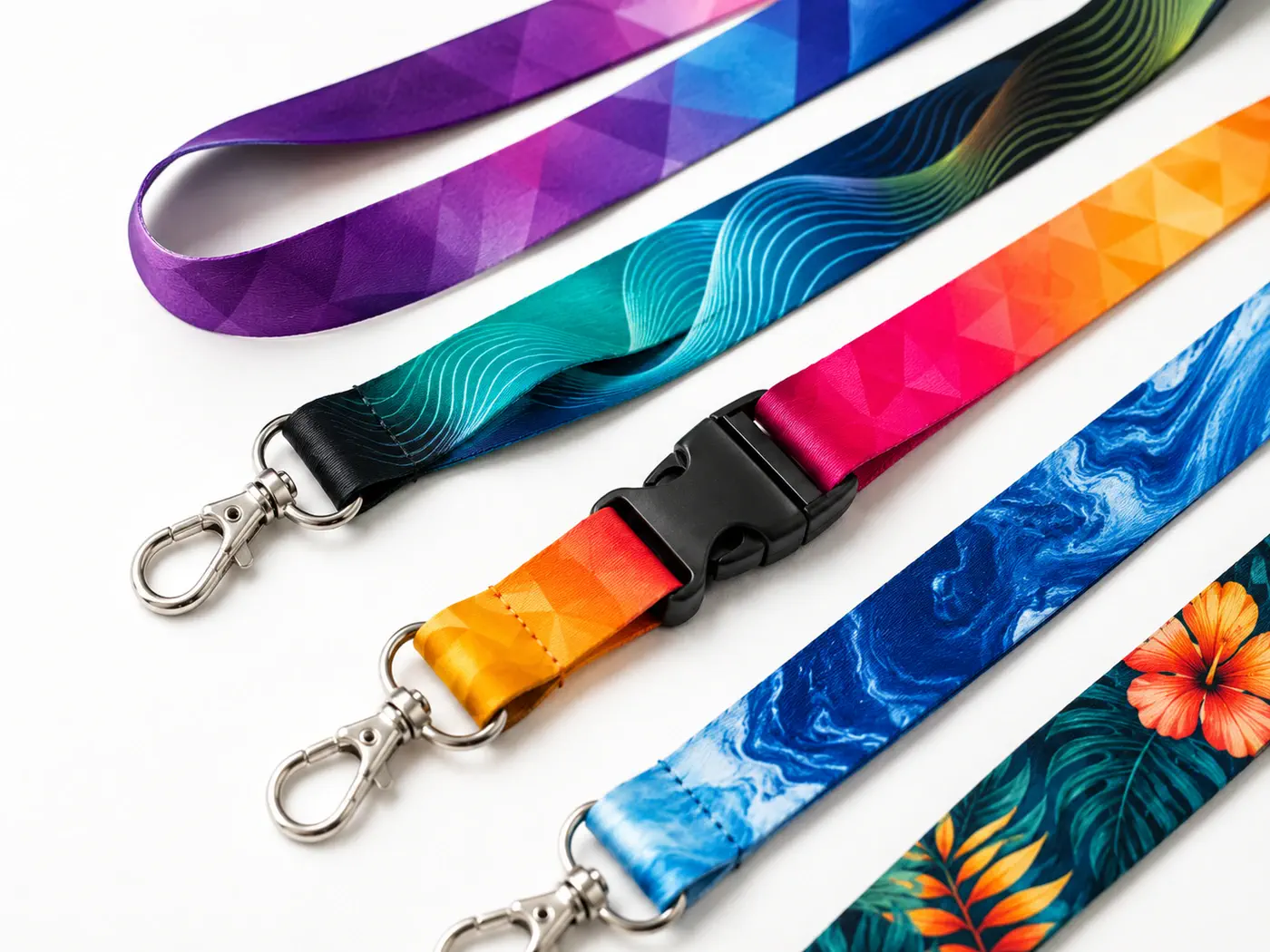
For a distributor ordering durable custom lanyards, approve a physical or production-representative sample and record measurable details: webbing width and feel, print appearance, seam and stitch construction, clip material and movement, badge fit, packing and the intended use. Ask how the bulk run will be compared with that approved reference. “Heavy duty” or “premium” alone is not an acceptance standard.
A recent maker discussion asked for stronger lanyards with reliable stitching and better hardware than disposable event giveaways. That is a useful product question, but the same strap cannot be recommended for every environment. A reusable conference credential, retail accessory and staff ID may need different webbing, clips and safety decisions. Start with the use case and available product constructions, then write a specification that can be checked on a sample and on the production run.
1. Inspect the strap in the hand, not only in a rendering
Record material, finished width, flat length measurement method, thickness or agreed hand feel and visible weave. Check cut edges and surface consistency. For printed designs, look at artwork legibility at actual width, repeat alignment, front and back, and color against an agreed proof. Sublimation can reproduce complex color; screen printing may be suitable for a simpler spot-color logo. The right route depends on the artwork and construction, not a blanket claim that one print method always lasts longer.

2. Treat the stitched end as a separate approval point
Specify where and how the strap is folded around the ring or fitting, and approve a representative end construction. Look for a secure stitch pattern, aligned folds and no obvious loose threads, skipped stitches or exposed sharp edges. Ask the supplier to retain the approved sample as the comparison reference. If the buyer requires a defined pull-strength test, agree on the method, load and acceptance level for the actual product; do not invent a universal number from a photograph.
Safety breakaway features are different from ordinary seam strength. If the lanyard will be used in a school, hospital or workplace, confirm the wearer policy and the required release construction separately. A breakaway clip is not a guarantee of safety in every situation; the buyer should approve the use-specific requirement. See the breakaway product specification for those options.
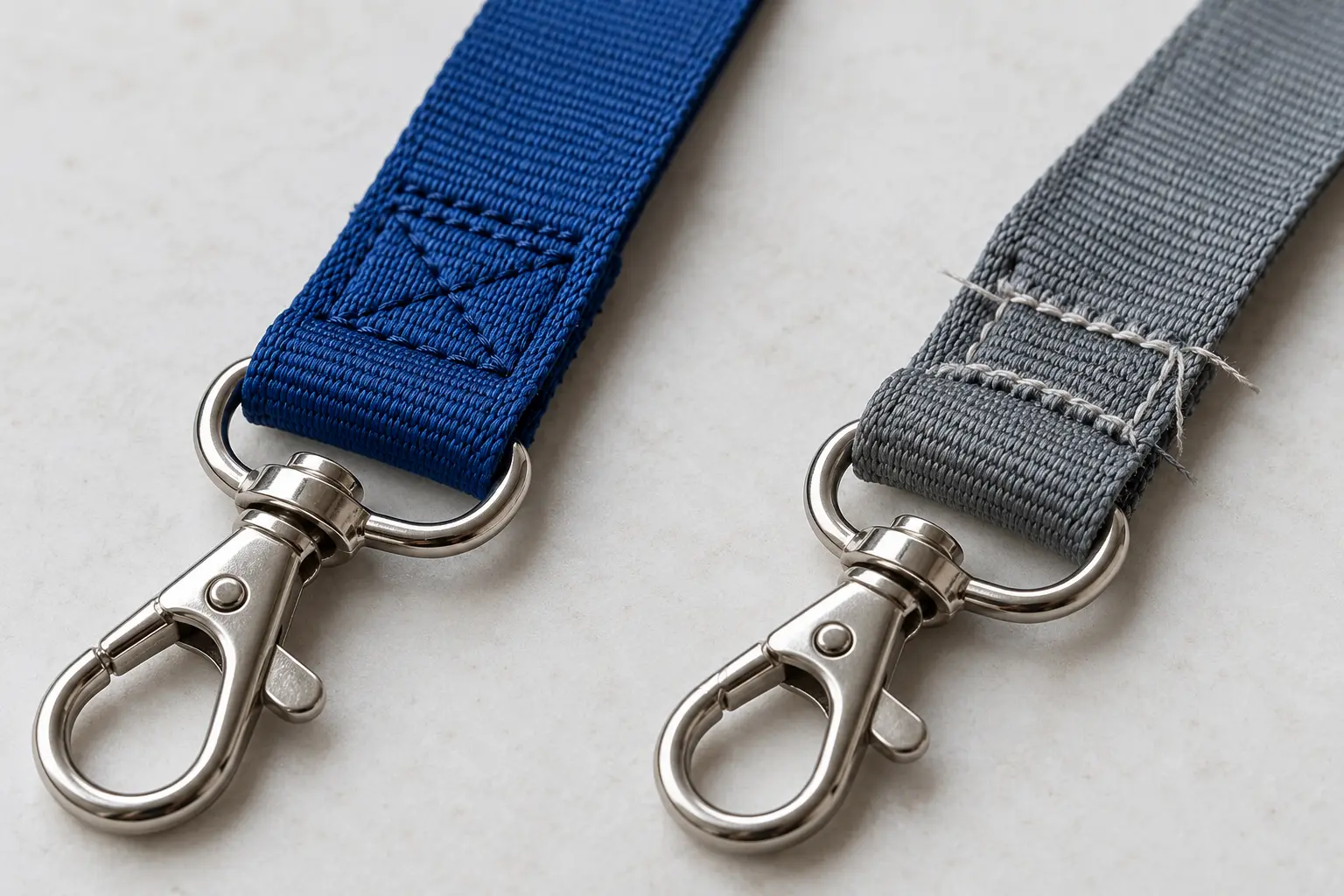
3. Test the exact clip and badge connection
Metal swivel hooks, plastic clips, split rings and detachable connectors behave differently. Check whether the gate opens and closes smoothly, whether the swivel rotates freely, whether edges catch on clothing, and whether the clip fits the holder slot or key ring. For a staff credential scanned many times a day, test the complete attachment motion with the intended badge; for an event kit, check how the card sits when worn and how it is handed out.
A photograph of a metal clip does not establish a load rating, corrosion resistance or service life. Ask for a component specification or an agreed test if the project needs one. Agree who supplies and approves the holder, especially when the end customer has its own badge stock.
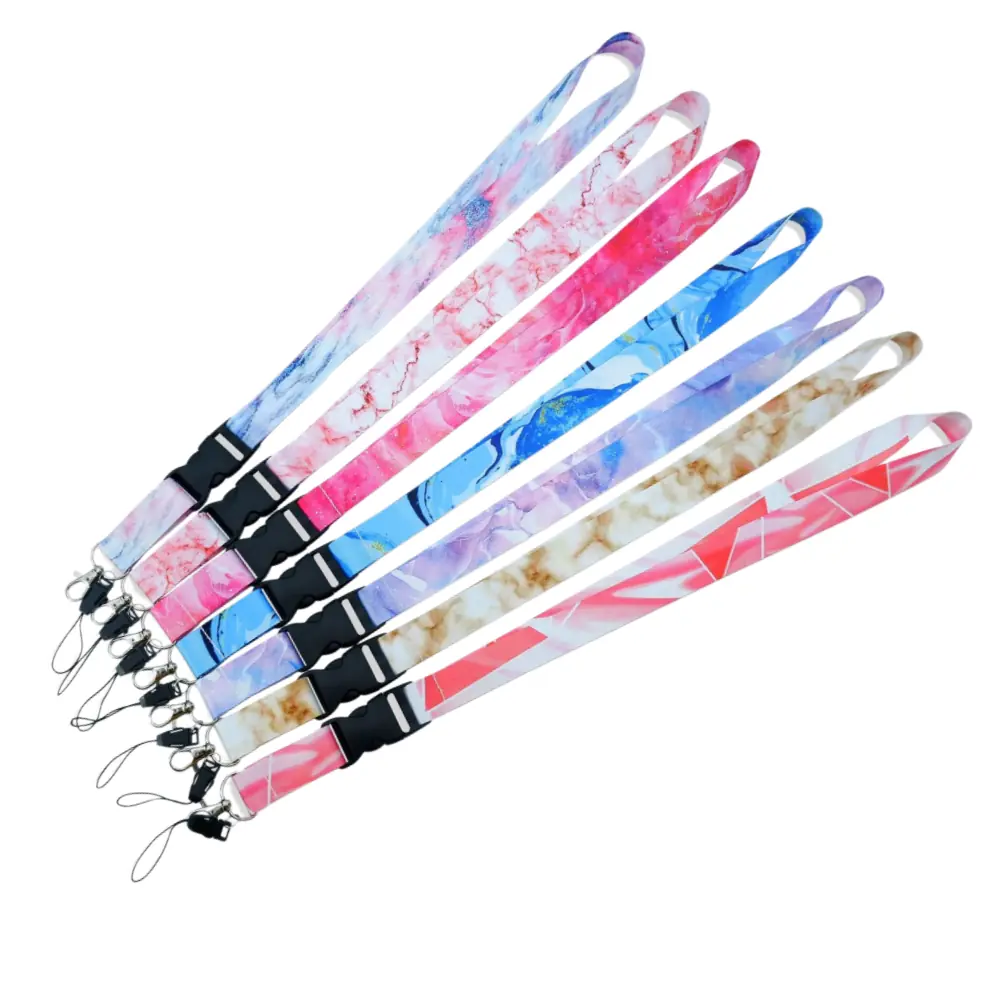
4. Make the sample approval transferable to production
| Approval record | What to capture |
|---|---|
| Artwork | File version, print method, logo size, placement, both sides and color reference. |
| Strap | Material, finished width and length method, feel, edge finish and attachment fold. |
| Hardware | Clip or ring model, finish, swivel/gate behavior, holder fit and any breakaway position. |
| Packout | Loose or assembled units, bagging, carton quantity and label requirements. |
| Acceptance | Which visible defects or measurements trigger rework, and the agreed inspection method. |
A digital artwork proof can confirm layout but cannot establish fabric feel or hardware behavior. A stock sample may demonstrate a component but not a custom print. Agree which questions each sample answers and who signs off before the bulk run. Link approved reference photos and files to the purchase order and keep one retained sample when possible.
5. Check the bulk run against the approved reference
Before shipment, ask for inspection photos or a report showing representative units from the actual run, including different cartons or design variants where relevant. Confirm quantities per design, visible print consistency, stitching, clip action, holder assembly and carton labels. If formal sampling or a third-party inspection is required, agree the sampling plan and defect categories before production; a vague “100% quality” statement does not define what happens when a defect is found.
For repeat orders, carry the approved specification forward and identify any changed material, hardware or artwork revision. The quality and approval page explains LANYVO's review stages, while the distributor supplier checklist covers supplier selection more broadly.
Frequently asked questions
Does thicker webbing always mean a longer-lasting lanyard?
No single thickness settles durability. Webbing, seam, hardware, intended load, wear pattern and care all matter. Agree a representative sample and use-specific acceptance criteria.
Can a photograph prove that a lanyard is durable?
No. It can show visible construction, but it cannot establish how the seam, clip and printing behave in use. Ask for a physical sample or the agreed test evidence when those properties matter.
What should a distributor send for a repeat quote?
The approved sample or reference number, artwork version, hardware and holder details, quantity per design, packing format, destination and any specific quality acceptance requirement.
Reader question behind this guide
This guide responds to a public buyer discussion. The discussion is a question signal, not market-size data or an endorsement of any supplier. Read the Reddit discussion. Product specifications, prices and feasibility must be confirmed for each order.