How custom lanyards are made: from webbing to a finished badge kit.
Custom lanyard manufacturing is a series of different decisions—not simply printing a logo on a strap. Follow the production areas photographed at LANYVO's Dongguan workshop, and learn what a buyer should approve at each stage.
Custom production starts at 500 pieces per design. Eligible standard-style trials from 100 pieces are a separate, construction-dependent route. We welcome B2B enquiries worldwide.
What are the main steps in making custom lanyards?
Define the strap and artwork, choose suitable webbing and branding, prepare the approved layout, produce the strap, add hardware and holders, then check the agreed construction and pack the order.
A sublimation lanyard, screen-printed strap and jacquard woven lanyard do not all follow the same branding route. The images below are real examples of factory areas; they are not a claim that every order passes through every machine or has already met a particular test standard.
- Confirm the artwork, width, length, material, quantity per design and destination.
- Select suitable webbing or a woven-logo construction and check colors against the order specification.
- Choose the appropriate print or weave method, then review logo repeat and orientation.
- Cut, join and assemble with the selected clip, buckle or breakaway component.
- Check badge-holder size and packing instructions before handover.
Start with the right webbing.
Material, strap width and the way the logo is formed affect which production route is possible.
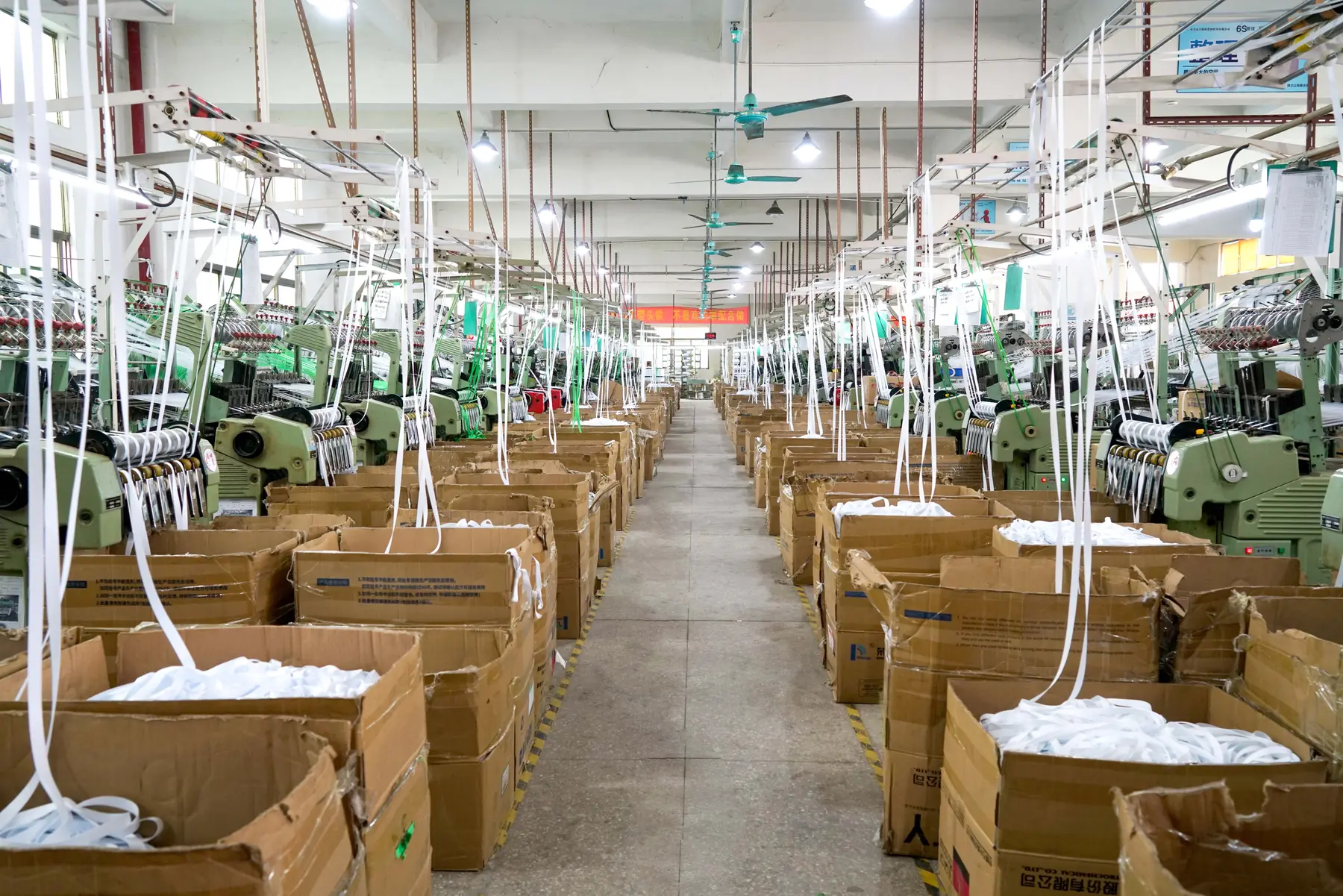
What the photo shows: narrow-webbing weaving machines and strap material. Printed polyester may be branded after webbing is produced; woven-logo styles form the graphic with yarn in the webbing itself. For an rPET request, agree the material evidence required for the actual order rather than assuming a workshop photograph proves recycled content.
Buyer approval: material, finished width, color reference, wearing length and whether the logo is printed or woven.
Woven logo lanyard specifications → · rPET material questions →
Match the logo to the production method.
Full-color graphics, simple spot-color marks and yarn-formed woven logos need different checks.
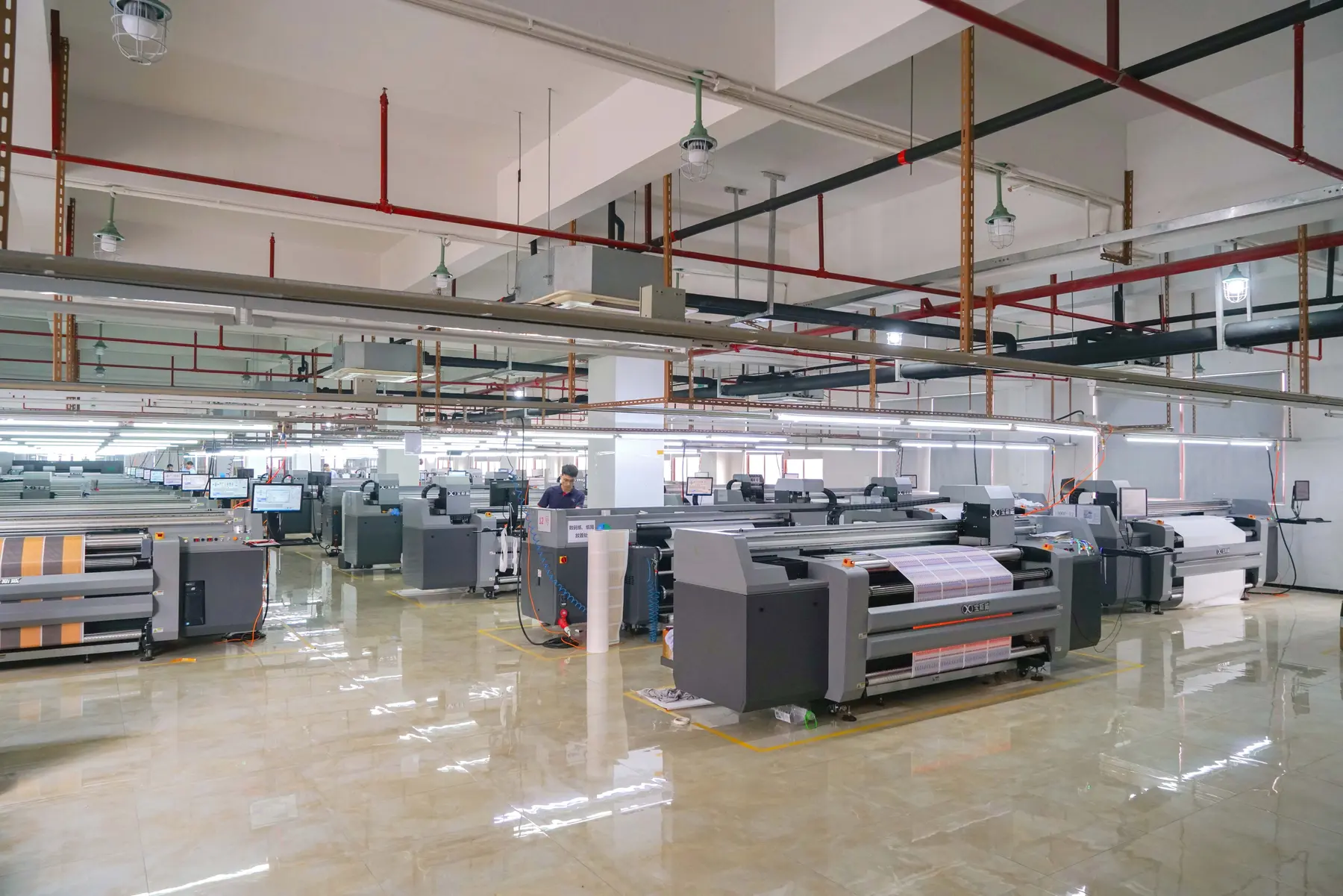
What the photo shows: roll-to-roll digital printing equipment used for compatible printed-strap workflows. It is not a photograph of a universal printer for all lanyard constructions.
Buyer approval: vector or high-resolution artwork, Pantone or other agreed color target, logo width, repeat spacing, readable text size and front/back orientation. A digital layout can review placement; it does not automatically guarantee the finished material's exact shade.
Read the color-proof checklist → · Compare three logo processes →
Produce the approved printed strap.
For applicable artwork and polyester constructions, heat transfer can be part of producing a full-color design on webbing.
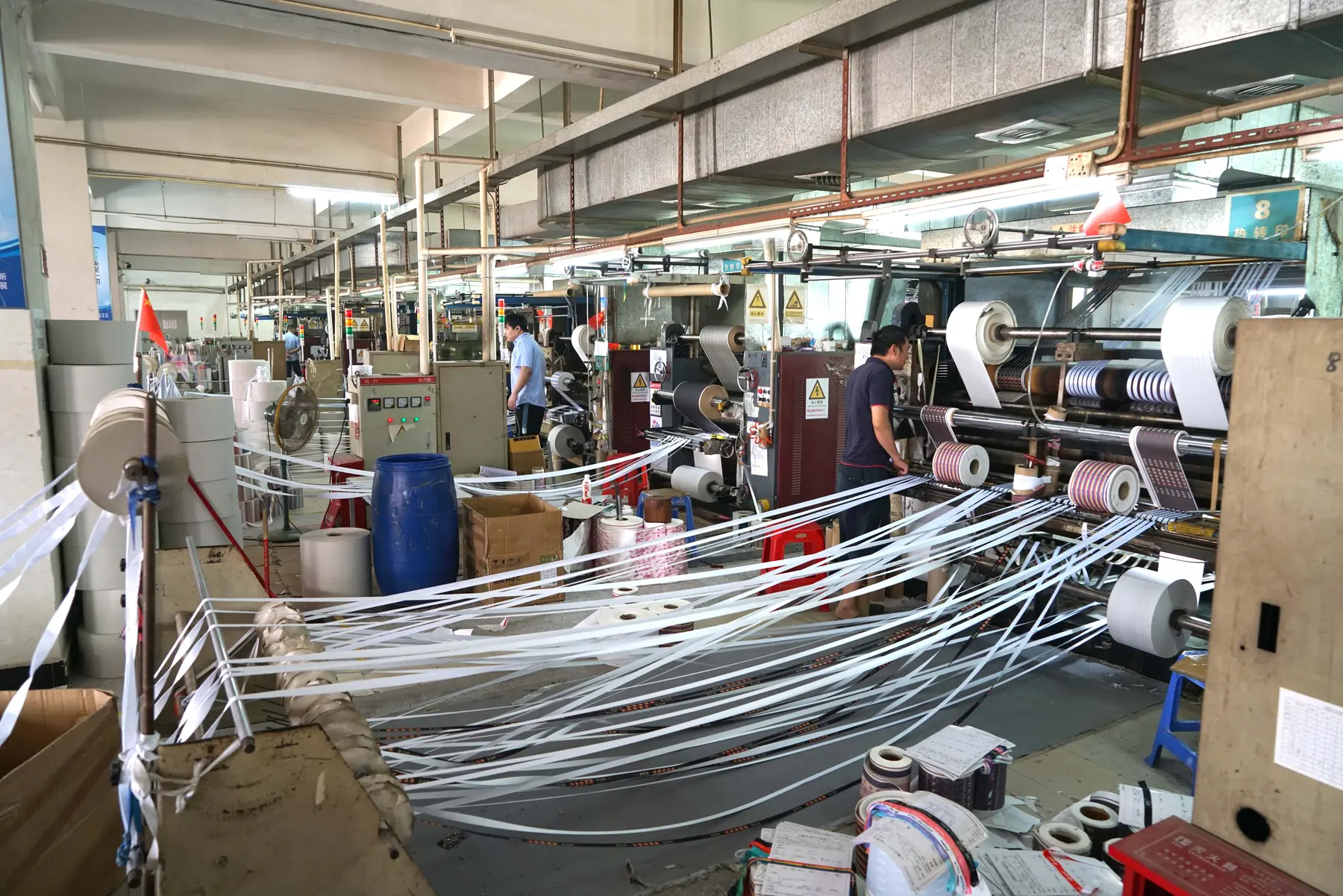
What the photo shows: heat-transfer equipment processing printed strap material. A woven-in logo takes another route; a screen-printed design uses a different application method. Do not assume every strap pictured here is recycled polyester or has passed a specific laboratory test.
Buyer approval: print direction, final visible color, repeat alignment, width, finished length and which side of the lanyard faces outward.
Full-color sublimation product → · Approvals and quality checks →
Finish the carrying system, not just the strap.
A custom lanyard can include a swivel hook, bulldog clip, detachable buckle, breakaway component or a matched clear badge holder.
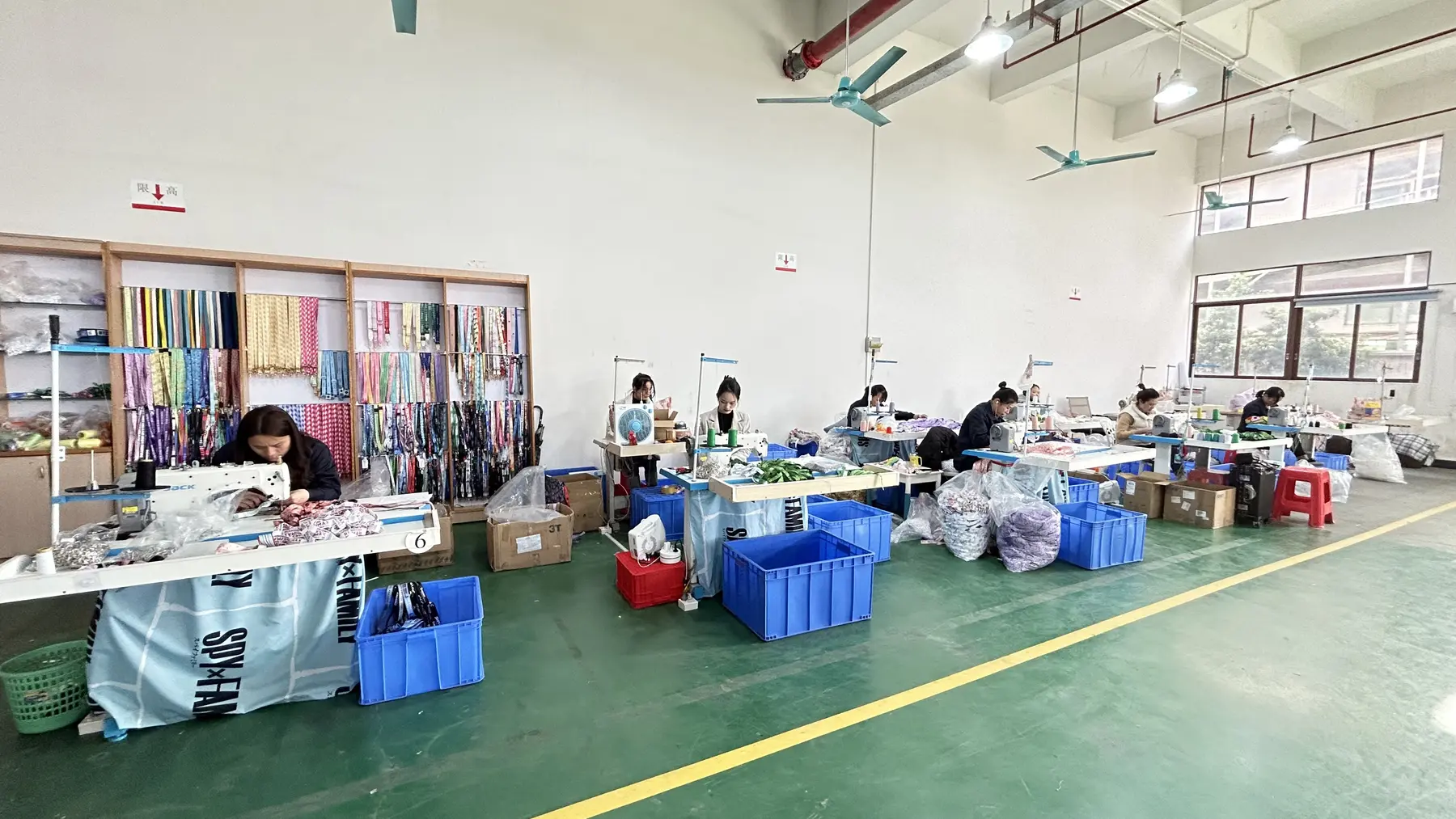
What the photo shows: sewing and assembly workstations with strap material and components. The image itself does not verify the breakaway release force or clip load rating for your specific order.
Buyer approval: stitching or joining position, hardware type, attachment orientation, neck-release requirement if applicable, and whether a double-clip arrangement is needed for wide passes.
Review breakaway options → · Choose compatible hooks and clips →
Check the finished configuration against the approved brief.
A professional factory quotation should define what will be checked and what the buyer receives—not imply that every possible inspection was performed on every lanyard.
| Approval point | Useful buyer evidence | Why it matters |
|---|---|---|
| Artwork & color | Versioned layout and agreed color reference; sample route where needed | Prevents an older sponsor logo or unintended reverse-side layout. |
| Material & finished size | Selected webbing, width and wearing-length reference | Stops a visually similar strap from becoming a different specification. |
| Hardware & holder fit | Clip, breakaway requirement and real badge insert dimensions | Prevents the finished lanyard from failing the user's carrying setup. |
| Quantity & sorting | Count per design; attendee/staff/sponsor groups where agreed | A single 2,000-piece total can hide four separate logos and minimum-order requirements. |
| Packing & shipment | Bulk vs assembled kit, carton labels, destination and needed arrival date | Keeps manufacturing, assembly and delivery scope comparable across quotes. |
Compare complete lanyard and badge-holder kits → · Use the printable RFQ checklist →
Questions to settle before custom-lanyard production.
Does every custom lanyard go through all four photographed factory areas?
No. A woven-logo lanyard, screen-printed lanyard and dye-sublimated printed lanyard can use different material and branding routes. Use the photographs to discuss the relevant production area, not to assume a universal process.
Can the factory supply straps and conference badge holders together?
The project can be reviewed as a matched kit. Supply the finished badge insert width and height, slot position, holder orientation and any pre-assembly or role sorting request. Components and packing are confirmed in the quotation.
What is LANYVO's minimum for custom production?
From 500 pieces per design. A selected 100-piece standard-style trial is a separate route; it is not a free sample or an automatic 100-piece minimum for screen printing and complex customization.
How do buyers outside Europe and the United States order?
LANYVO welcomes business enquiries worldwide. Send the country, delivery postal code where available, order quantity, artwork and arrival date; available shipping scope, price and timing are reviewed for the actual project.
Do these photographs prove an ISO audit, safety certificate or rPET percentage?
No. Workshop photographs demonstrate visible production areas, not a formal audit result, recycled-content claim or laboratory performance of an individual order. Request the specific documentation or test scope before quotation.