Quick answer
Badge reels can fail at the mount, cord, return mechanism or badge tab. A reel that will not retract is a different purchasing problem from a clip that slips off clothing. Before ordering in bulk, inspect a complete sample with the intended badge holder, record the exact symptom and agree acceptance criteria with the supplier. No single cord material or housing description proves the life of the finished assembly.
In a Reddit discussion about retractable badge clips, users describe recurring failures and compare the parts that gave way. A separate replacement-reel discussion concerns a rear clip that does not fit a belt loop well. These anecdotes suggest useful inspection questions; they do not establish a failure rate for any product or prove demand from wholesale buyers.
1. Separate four failure points before comparing suppliers
| Observed problem | What to inspect | What to record for approval |
|---|---|---|
| Reel falls off its mounting point | Clip opening, engagement depth, garment or connector thickness, closure | Front and rear photos; intended wearing position; complete mount arrangement |
| Cord frays, catches or breaks | Cord condition, exit contact, pull direction and nearby edges | Where wear appears; extension used; whether the sample was snagged |
| Holder hangs low or returns poorly | Total suspended ID kit, return action and unobstructed cord path | Weight of the complete kit; rest position; behavior during agreed pulls |
| Badge separates below the reel | Tab closure, holder slot, connector and badge-hole fit | Holder dimensions; tab construction; which connection separated |
Describe the observation without guessing the internal cause. For example, “the holder remains extended with two cards and a rigid case” is more useful than “the spring is bad.” A supplier can review the configuration, then propose a different reel or investigate a damaged sample.
Keep return capability separate from a claimed maximum load or cord strength. A reel may support an item without returning that item fully to its resting position. Manufacturer KEY-BAK explains this distinction for its own models. Its ratings do not apply to LANYVO products; request specifications for the exact construction being quoted.
2. Evaluate the complete ID kit, not an empty reel
Send the supplier the actual holder or its dimensions, plus the number of cards and any keys, tokens or accessories. Adding a rigid case or extra cards changes the suspended assembly. First check the approved wearing position, then try the distance and direction needed to reach the reader. A reel mounted on a neck strap and one clipped to a waistband may follow different cord paths.
- Identify the sample. Record reel model or construction reference, mounting option, cord type if confirmed, tab and holder. Photograph the front, rear and assembled kit.
- Check the mount at rest. Confirm that the intended clip or lanyard connector engages fully and does not obstruct the cord exit.
- Try controlled reader access. Pull smoothly within the agreed extension range. Observe whether the kit returns consistently without catching or twisting. Avoid snap-back demonstrations.
- Inspect after the agreed evaluation. Record cord wear, clip movement, loose components and closure condition. Keep the physical approval sample for comparison with production.
These are proposed buyer checks, not results from a LANYVO endurance test. Do not open a spring housing to diagnose a sample. Remove visibly damaged reels from use and ask the supplier to review or replace them. Workplace policies determine whether a neck-worn reel, breakaway feature or particular clip is suitable.
3. Turn “durable” into an agreed acceptance brief
For a distributor, a vague durability claim is difficult to check across repeat orders. Agree a written procedure before asking factories to quote an endurance requirement. State the load, extension length, pull direction, speed or method, number of cycles, number of samples and pass/fail conditions. If these remain unspecified, record them as open items rather than comparing unlike cycle claims.
Define what counts as a failure: a detached mount, a tab opening, visible cord damage, or a kit that fails to return to an agreed position. Also agree how production samples will be selected and what happens if a batch fails the approved check. Requirements involving a named standard or independent laboratory need a separate, documented scope.
For broader strap and hardware inspection, use the custom lanyard sample-to-bulk quality checklist. For a mounting mismatch rather than a durability question, follow the lanyard-to-reel interface guide.
4. Ask for a quotation that can be checked
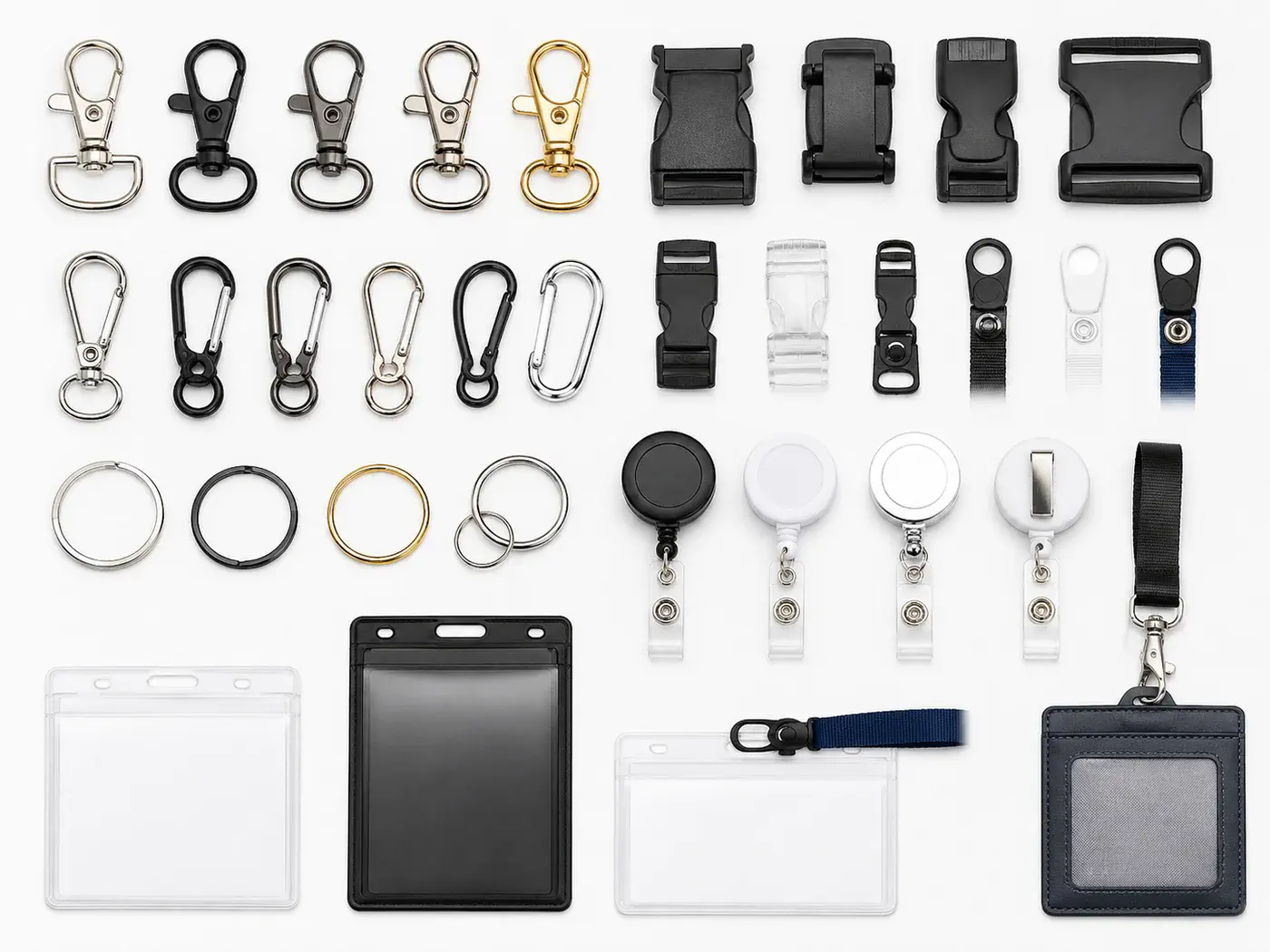
Include quantity per design, logo artwork, wearing position, complete ID-kit details, mounting photos, required arrival date and destination. Ask the supplier to identify which proposed parts are standard, which are custom and which sample checks are included in the quotation.
LANYVO’s badge reel lanyard product page is the purchasing starting point. Custom production is generally reviewed from 500 pieces per design. Selected standard constructions may qualify for a 100-piece trial after review. A new bespoke housing or mold requires a separate feasibility and quantity discussion. Confirm the exact configuration before using any general quantity as a promise.
Buyer questions
Why does a badge reel stop retracting?
A loaded holder may exceed the chosen model’s return capability, or the cord, exit or mechanism may be damaged. Record what happens with the intended ID kit and ask the supplier to review the sample; a symptom alone does not identify the cause.
Does a stronger cord make a badge reel last longer?
Cord construction is one factor. The mount, tab, exit geometry, return mechanism and actual use also matter. Compare complete samples under an agreed procedure instead of treating one material claim as a service-life guarantee.
How many pull cycles should a bulk buyer request?
Agree a test method and acceptance limit with the supplier for the intended application. Specify load, extension, direction, cycle count, sample quantity and failure criteria. This guide does not establish a universal cycle rating.
Review the complete badge reel kit.
Send front and rear reference photos, holder details, quantity per design and delivery requirements. Ask LANYVO to confirm the construction and sample route.
Request an assembly review ↗Sources and editorial scope
Community posts provide individual experiences and questions, not market-size estimates, verified failure statistics or endorsements. Manufacturer references describe that manufacturer’s models; their specifications do not apply to LANYVO. The checklists above are proposed purchasing checks, not reported test results.
- Reddit: repeated retractable badge-clip failures
- Reddit: replacement reel clip and belt-loop fit
- KEY-BAK: model-specific reel and retraction-force guidance
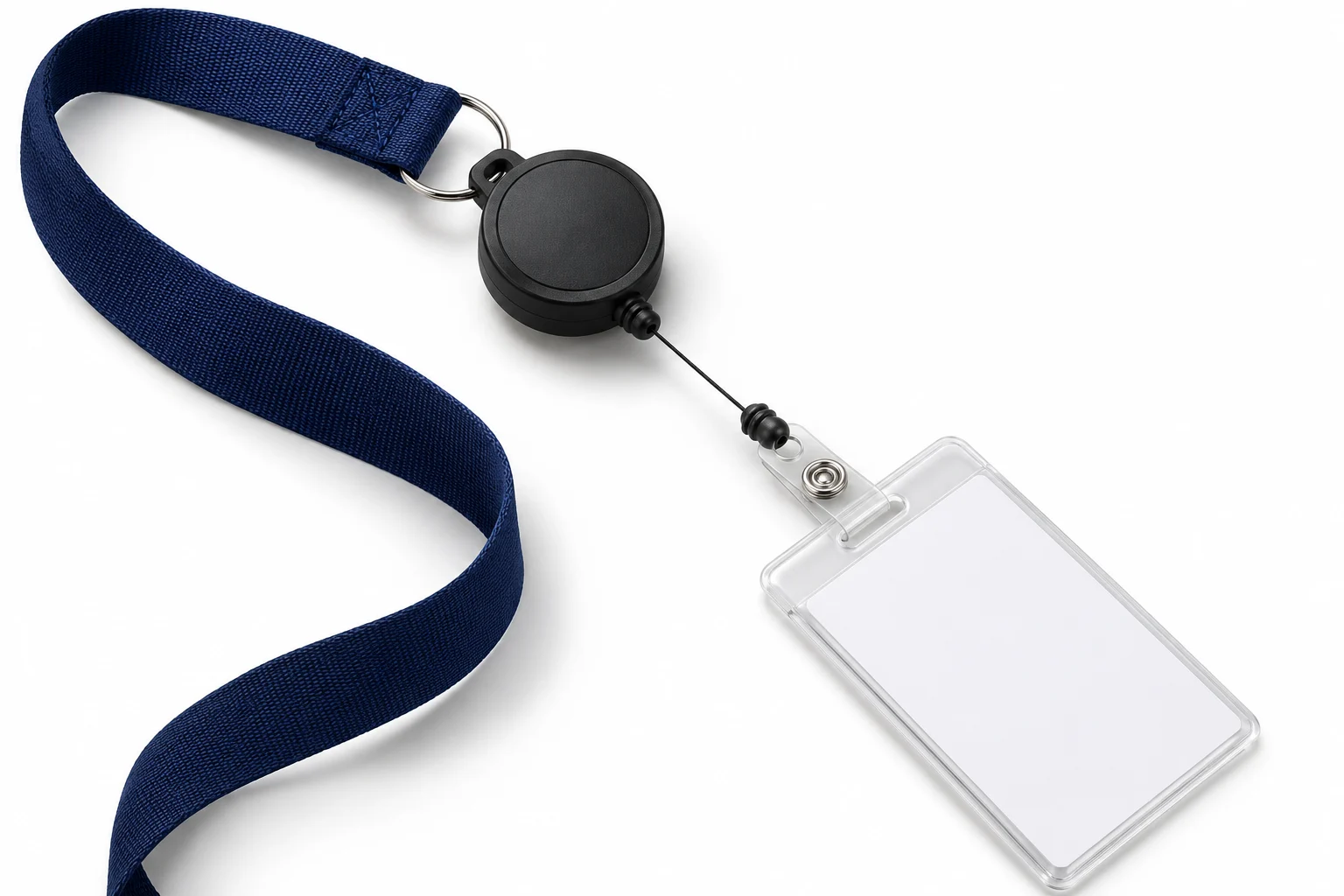
Prepared for LANYVO bulk buyers and distributors. The cover is an AI-generated product illustration, not a photograph of an approved sample. Confirm final parts, dimensions, workplace suitability and acceptance criteria against the approved sample.