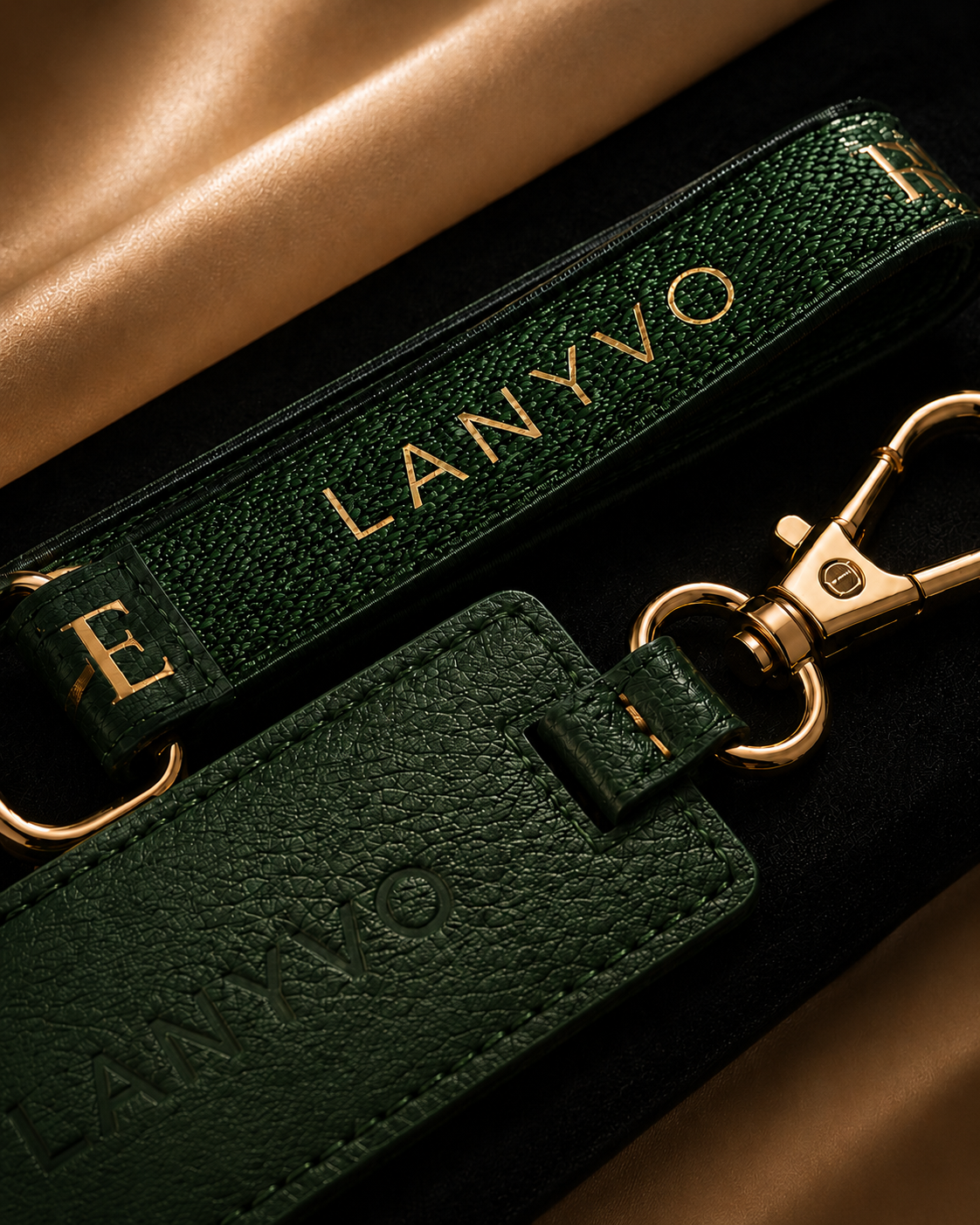
Use jacquard woven lanyards for solid shapes, repeated text and a premium textile finish. Use sublimation for gradients, photographs and complex full-color designs. Screen printing is suitable for simpler artwork on compatible webbing.
Side-by-side comparison
| Method | How it works | Best for | Buyer check |
|---|---|---|---|
| Jacquard woven | Logo formed with colored yarn | Solid shapes, repeated text, premium texture | Gradients and very small details may need simplification |
| Sublimation | Dye transferred into the webbing | Full color, gradients and photographic artwork | Proof repeat, seams and color output |
| Screen printed | Ink applied to the strap surface | Simple logos and limited colors | Check coverage, abrasion and color count |
Compare the same artwork at the finished strap width
“Printed lanyard” covers more than one process. Screen printing deposits ink on suitable webbing. Dye sublimation transfers the design into suitable polyester fibers. A jacquard woven logo is formed by the yarn pattern. Compare the intended finished appearance of each route rather than asking for a generic printed-versus-woven price.
Start with the logo file and the proposed strap width. Review 10, 15, 20 or 25 mm where available for the construction, and ask the supplier to show the actual printable or woven area. Edge margins, sewing, buckles and attachments can reduce the usable space. The width and artwork selection guide covers this sizing decision in more detail.
- Fine lettering: inspect the smallest letters and the spaces inside them at actual size. A woven simulation should show which details need simplifying.
- Gradients and photographs: review a sublimation proof. Converting a gradient to a few yarn colors changes the design rather than reproducing the same effect.
- Solid brand colors: compare ink, dyed webbing or yarn references as appropriate. A screen image is not a physical color standard.
- Repeat and orientation: mark the logo repeat, front and reverse appearance, and the direction of text when the complete lanyard is worn.
Three buyer scenarios for choosing a logo method
| Project brief | Starting method | Approval question |
|---|---|---|
| Repeated club name with simple shapes | Jacquard woven | Do the letter gaps remain open, and is the reverse acceptable? |
| Conference with gradients and several sponsor logos | Dye sublimation | Are the smallest logos readable at the final width, including near seams? |
| Staff ID with a solid-color wordmark | Screen printing on compatible webbing | Does the ink coverage remain clear on the selected strap texture? |
These are starting points for sampling. If a woven logo loses important detail, compare a simplified approved version with a printed alternative. Do not switch artwork versions without the brand owner’s approval.
Compare prices on one complete specification
There is no universal rule that woven lanyards are cheaper or more expensive than printed lanyards. A useful comparison holds the width, finished length, quantity per design, attachment, badge holder, packing and delivery scope constant. Identify what changes between methods: artwork preparation, yarn or ink colors, setup, sampling and production.
For LANYVO, the published custom-production route starts at 500 pieces per design. An eligible 100-piece standard-style trial is a separate route and should not be assumed to include a new woven construction. Ask for the sample charge and schedule for the selected method before agreeing the order. Use the price guide for the broader quotation breakdown.
What to inspect before approving bulk production
Approve the front, reverse, edges and sewn assembly together. For woven work, inspect letter definition, loose yarns and the reverse pattern. For screen print, inspect coverage and adhesion on the chosen webbing. For sublimation, inspect color, artwork alignment and unprinted areas near folds or assembly points.
Agree a practical rubbing or cleaning check that matches the expected use. A woven logo can still become unreadable through wear or poor construction, and a printed logo is not automatically short-lived. Compare actual samples and retain the approved artwork, physical reference and inspection criteria for repeat orders.
Then review the matching commercial route: woven-logo lanyards, screen-printed lanyards or full-color sublimation lanyards.
Frequently asked questions
Are woven lanyards more durable than printed lanyards?
The woven logo is integrated into the strap, but overall durability also depends on webbing, construction, hardware and use. Compare the complete product rather than one feature alone.
Which method is best for gradients?
Sublimation is generally the strongest option for smooth gradients and photographic effects.
Can small text be woven?
Some text can be woven, but the required size and line weight depend on the width and construction. Simplification may be needed.
Should we request a sample?
Yes, especially for color-sensitive, premium or high-volume programs.